

The Future of Driving in India: How Smart Roads, Connected Cars & AI Will Change the Way We Drive
What if roads could learn from every journey? Explore how ADAS, connected vehicles, smart signals and AI are shaping India’s roads, and how Tranna is building towards a safer, smarter future.
Introduction
Imagine driving down a road a few years from now.
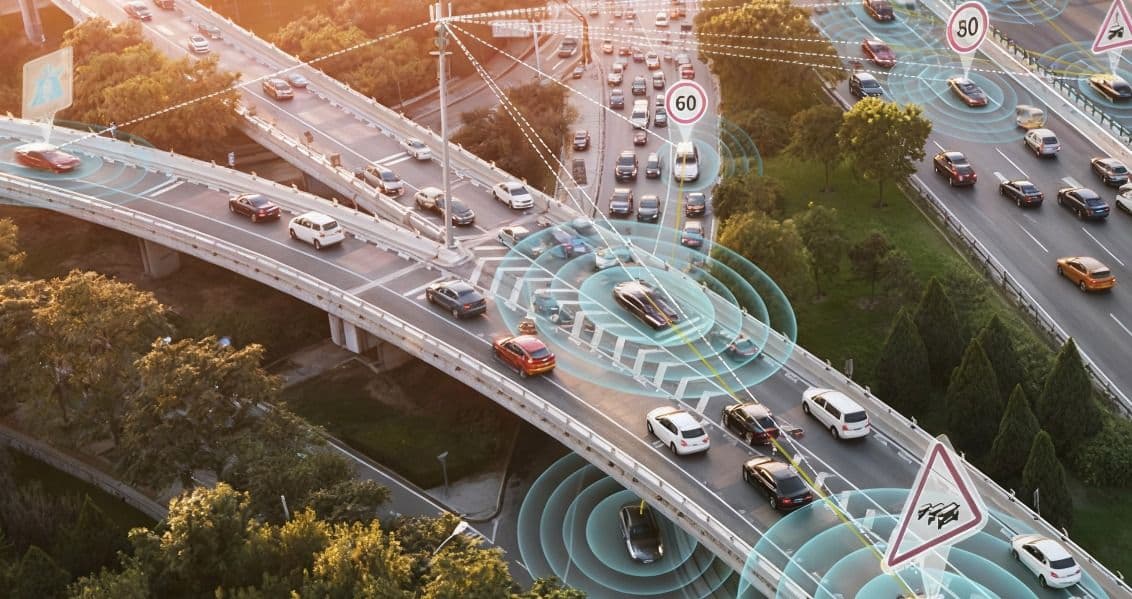
You approach a busy junction, but the signal has already adjusted itself because the road ahead is congested. Your car receives a warning that a vehicle around the corner has suddenly braked. Before you reach a pothole, your navigation system alerts you that the road surface is damaged. An ambulance approaches from behind, and traffic signals ahead automatically create a green corridor.
This may sound like a scene from a futuristic movie.
But much of the technology behind it is already being developed, tested and introduced in India.
The future of driving will not simply be about cars that drive themselves. It will be about cars that can understand their surroundings, roads that can respond to traffic, traffic signals that can adapt in real time, and vehicles that can communicate with one another and with the infrastructure around them.
India is at an important point in this transition.
The country recorded 4,80,583 road accidents and 1,72,890 fatalities in 2023, according to the Ministry of Road Transport and Highways (MoRTH). The same report identified over-speeding as a major contributor to road deaths.
With millions of vehicles sharing roads with pedestrians, motorcycles, buses, auto-rickshaws and trucks, India's future mobility challenge is not simply to move more people.
It is to move them more safely, intelligently and efficiently.
And that is where the future of driving begins.
The Future Will Not Be Just About Smarter Cars
For decades, road safety largely followed a simple model:
Driver + Car + Road.
The driver made the decisions, the car responded, and the road remained mostly passive.
That model is changing.
The next generation of mobility is moving towards:
Driver + Intelligent Vehicle + Connected Road + Data + AI.
A car may know what is immediately in front of it through cameras and radar. A connected vehicle could eventually receive information about something outside its line of sight. A smart traffic signal can understand changing traffic demand. Roadside infrastructure can detect incidents. And software can bring all of these signals together.
This is the idea behind Intelligent Transportation Systems (ITS) and connected mobility.
India is already building pieces of this ecosystem.
MoRTH has been expanding Advanced Traffic Management Systems on highways and expressways, while projects are increasingly combining traffic monitoring, incident detection, enforcement and real-time information. The Bengaluru–Mysuru corridor, for example, was listed by the government as having completed ATMS augmentation in July 2024.
The transformation is therefore already underway.
1. ADAS Will Become the New Safety Layer
One of the first major changes most drivers will experience is ADAS — Advanced Driver Assistance Systems.
ADAS does not mean that the car is fully autonomous.
Instead, it gives the vehicle the ability to assist the driver.
Depending on the vehicle and system, this can include technologies such as:
Automatic Emergency Braking (AEB) Forward Collision Warning Lane Departure Warning Lane Keeping Assistance Adaptive Cruise Control Blind Spot Detection Driver Monitoring Traffic Sign Recognition
A vehicle can use cameras, radar and other sensors to understand what is happening around it and provide warnings or, in some situations, intervene.
For example, if the vehicle ahead suddenly brakes, an ADAS-equipped car may detect the rapidly closing distance and warn the driver. If the driver does not react quickly enough, an emergency braking system may assist in avoiding or reducing the severity of a collision.
Why ADAS matters even more in India
India presents a particularly difficult environment for automated perception.
A typical urban road can contain cars, motorcycles, bicycles, buses, pedestrians, auto-rickshaws, delivery vehicles and roadside activity all interacting within the same space.
Lane markings may be inconsistent. Traffic behaviour can change quickly. Monsoon rain can reduce visibility. Roadside objects can appear unexpectedly.
This is why ADAS designed for India cannot simply assume perfectly marked roads and predictable traffic.
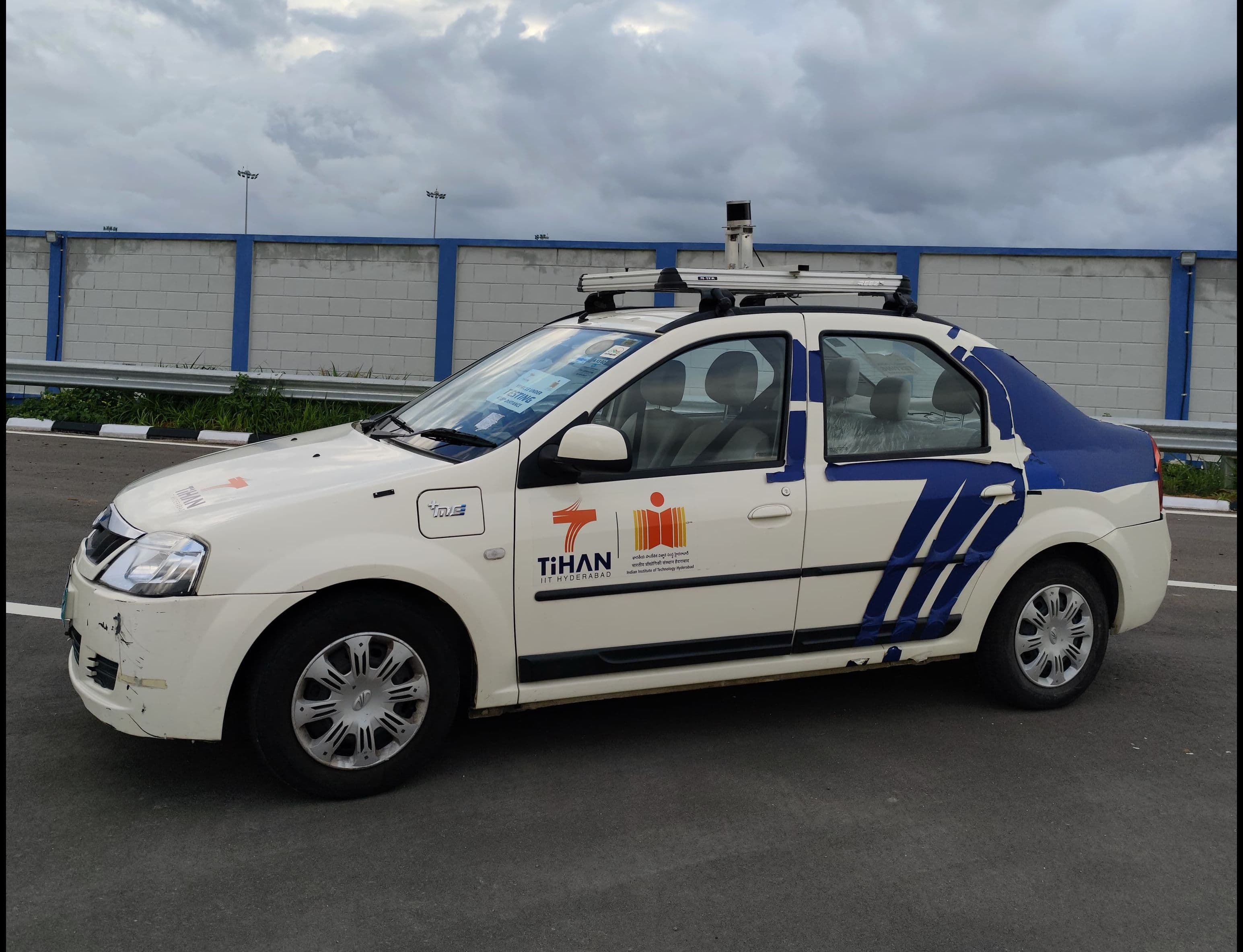
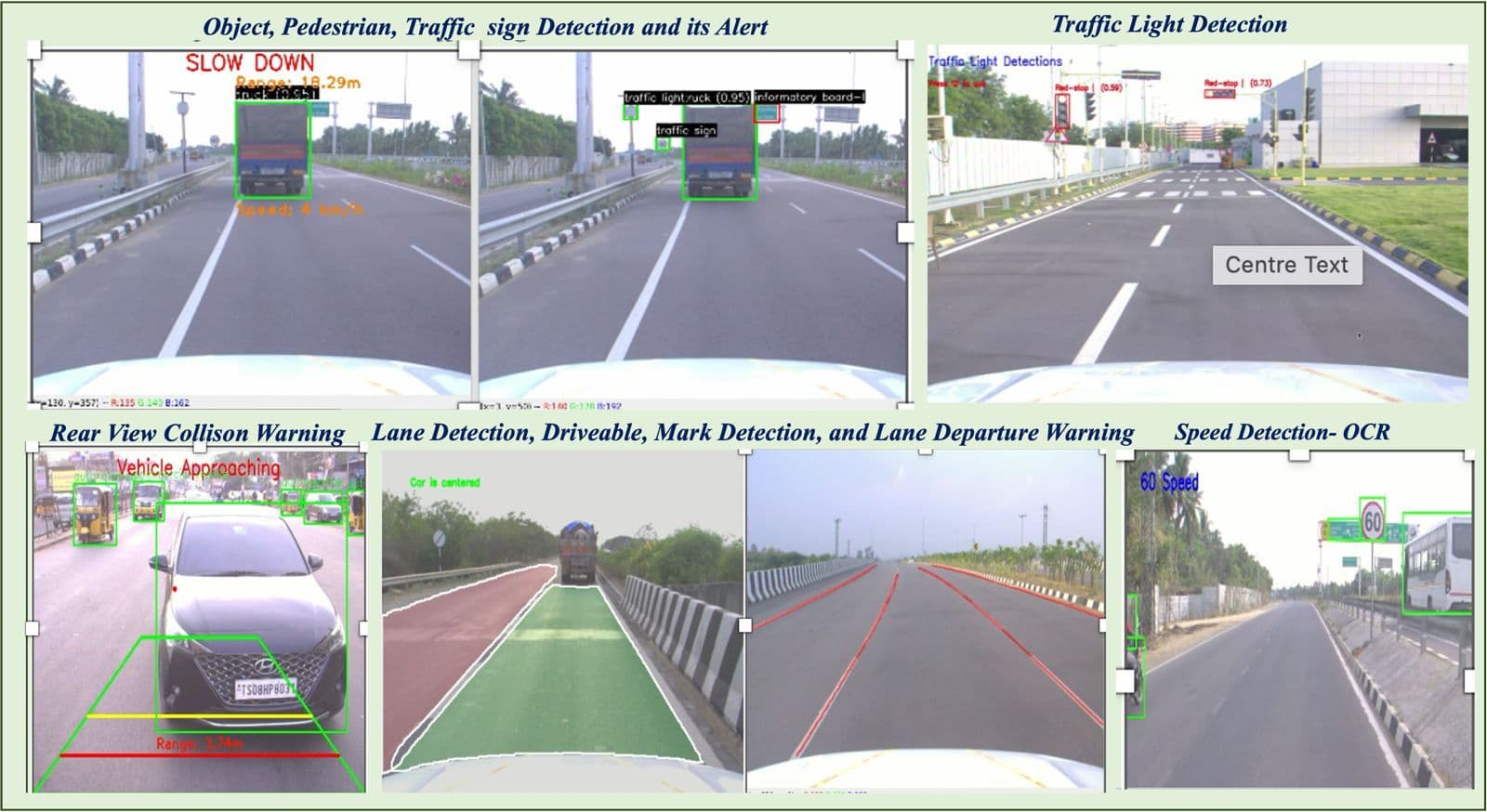
Indian research is increasingly focused on exactly this problem. TiHAN at IIT Hyderabad, for example, has developed autonomous-navigation test infrastructure with Indian road scenarios and an ADAS software stack covering pothole detection, traffic-sign recognition, traffic-light detection, lane-mark detection and speed-bump detection.
India's Bharat New Car Assessment Programme (Bharat NCAP) also evaluates vehicles on Safety Assist Technologies in addition to occupant protection, creating a framework that encourages manufacturers to improve active safety features.
The future therefore isn't simply about building faster cars.
It is about building cars that can help drivers make safer decisions.
2. Cars Will Start Talking to Other Cars
Today, a vehicle primarily depends on what its own sensors can see.
Tomorrow, it may also learn from what other vehicles know.
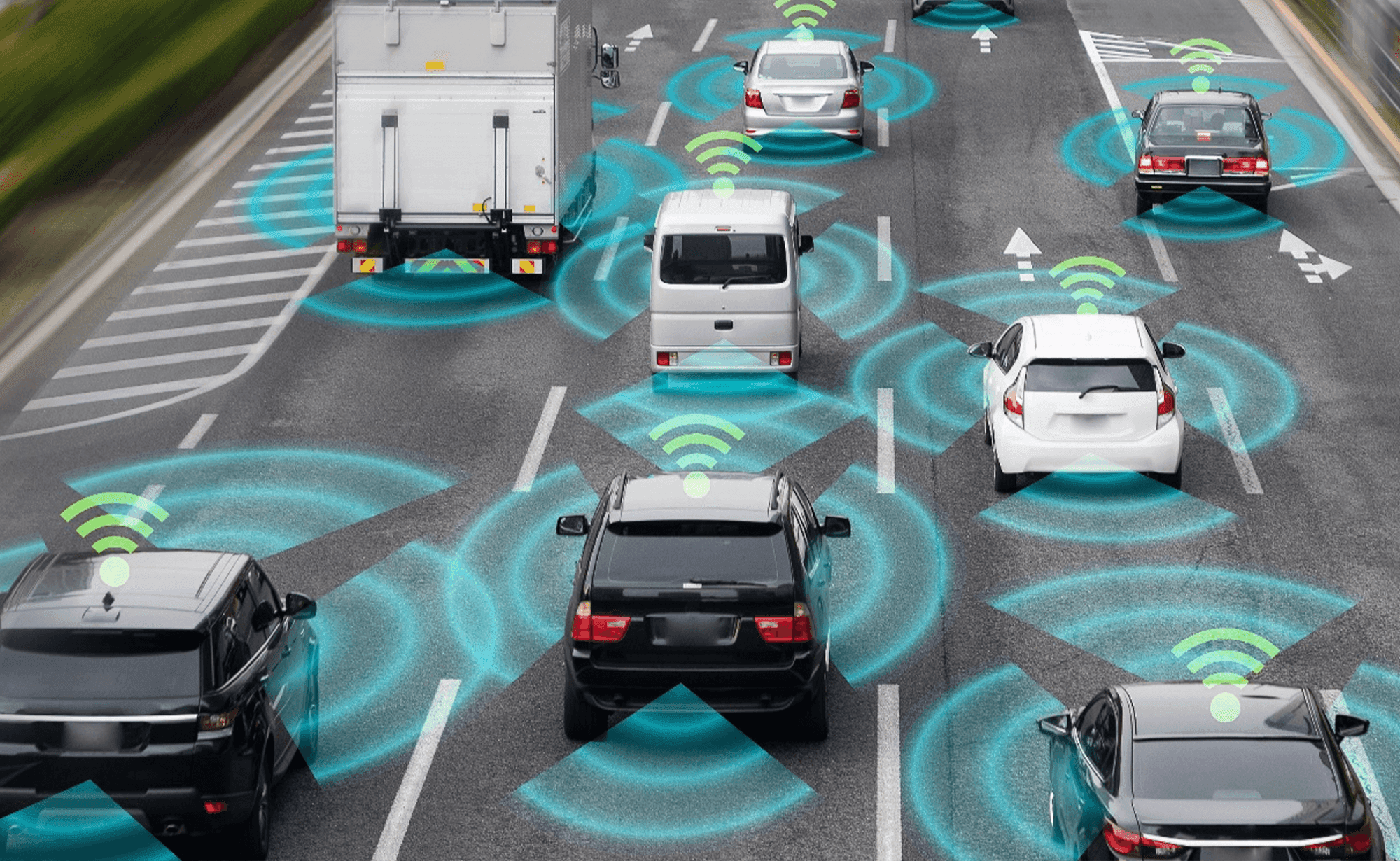
This is called Vehicle-to-Vehicle communication, or V2V.
Imagine a car 300 metres ahead suddenly performs emergency braking.
Your vehicle cannot directly see the reason because another vehicle is between you and it.
With V2V communication, the vehicle ahead could transmit information such as its speed, position, direction and acceleration.
Your vehicle could then receive an alert:
Emergency braking ahead. Slow down.
The Ministry of Road Transport and Highways issued a draft notification in August 2026 proposing a phased implementation of V2V communication in India. The draft refers to AIS-230 and proposes that vehicles manufactured from 1 October 2028 be fitted with compliant V2V systems, following an earlier compliance phase for vehicles equipped with the technology.
The proposed safety applications include:
- Emergency Brake Alert
- Forward Collision Warning
- Wrong-way Driving
- Emergency Vehicle Alert
One of the most important advantages is that V2V can provide information beyond direct line of sight.
That changes the fundamental question a vehicle can ask.
Instead of only asking:
“What can I see?”
it can eventually ask:
“What does the road network know?”
3. From V2V to V2X: Vehicles Will Talk to the Road
V2V is only one part of a much larger system.
The broader concept is V2X — Vehicle-to-Everything.
That can include:
V2V — Vehicle to Vehicle V2I — Vehicle to Infrastructure V2P — Vehicle to Pedestrian V2N — Vehicle to Network
For a driver, this could eventually mean receiving information from:
A traffic signal.
A roadside unit.
An approaching ambulance.
A road-work zone.
A connected pedestrian crossing.
A collision warning system.
A traffic-management centre.
Or even another vehicle that is not directly visible.
India's telecommunications regulator, TRAI, released a consultation paper on the regulatory framework for V2X communication in April 2026, showing that the country is now actively working through the policy, spectrum, infrastructure and security questions required for connected mobility.
TiHAN's autonomous-navigation testbed at IIT Hyderabad already includes C-V2X, 5G, smart poles and edge-cloud infrastructure for research and validation.
This is important because connected mobility cannot exist through vehicles alone.
The road itself has to become part of the communication system.
4. Traffic Signals Will Stop Being “Just Timers”
Think about a conventional traffic signal.
It changes according to a programmed sequence.
But traffic doesn't behave according to a fixed schedule.
One lane may be almost empty while another has a kilometre-long queue.
A signal that gives both directions the same amount of time may therefore waste valuable road capacity.
The next generation of signals can respond to what is actually happening.
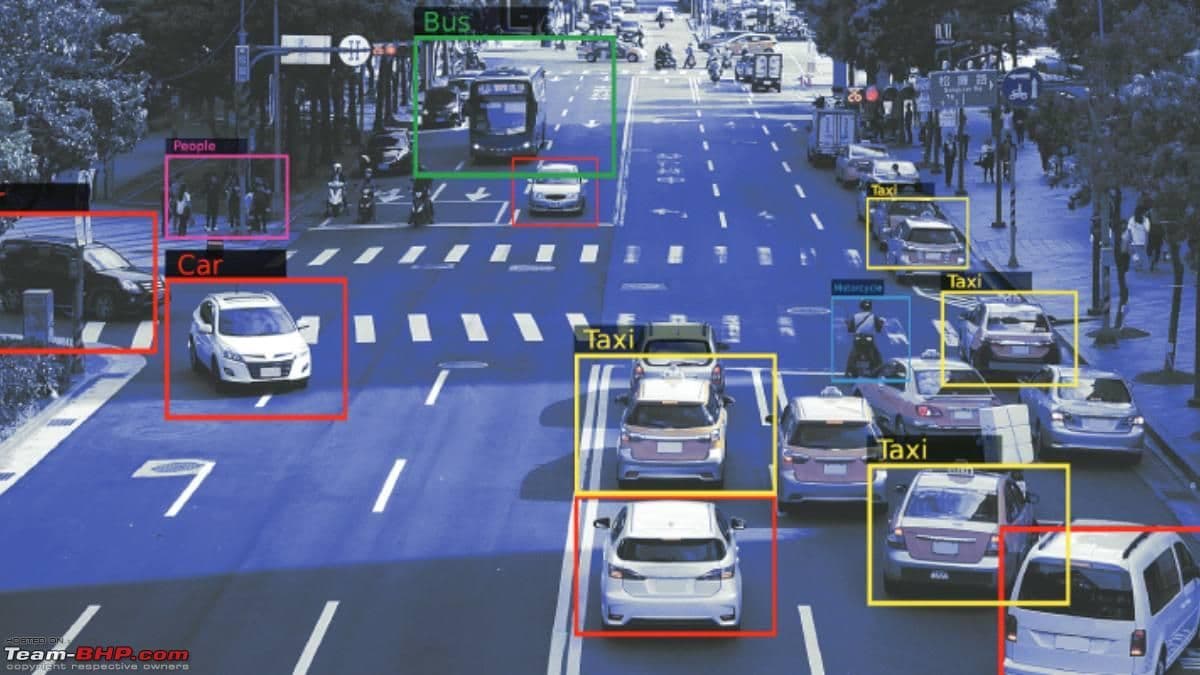
These are known as Adaptive Traffic Signal Control Systems.
Instead of simply following a fixed timer, they can use traffic information to adjust signal timings dynamically.
India has already developed technologies for this.
C-DAC's adaptive traffic-control technology is designed to respond to real-time traffic patterns and calculate signal timings based on detected traffic volumes. Its systems are specifically designed to work with the highly heterogeneous and non-lane-based traffic conditions found in India.
And this isn't just a laboratory concept.
In September 2026, the Government of India approved a ₹1,789.52 crore Intelligent Traffic Management System for Delhi, covering 42 traffic corridors. The project includes 1,092 adaptive traffic-control locations and 1,029 enforcement locations.
Signals will be able to dynamically adjust based on traffic conditions, while the system will also integrate incident detection, automated enforcement and real-time traffic information.
That means the signal of the future won't simply say:
“Your turn is next.”
It will effectively ask:
“What is happening on the road right now, and what should I do about it?”
5. One of the Biggest Changes: Signals Will Know About Ambulances
Perhaps one of the most powerful applications of connected traffic infrastructure will be emergency-vehicle priority.
Imagine an ambulance approaching a major intersection during peak traffic.
Today, getting through the junction can depend on traffic conditions and manual intervention.
In a connected system, the ambulance could communicate with the traffic infrastructure.
The network could then:
Detect the approaching ambulance.
Prioritise its movement.
Adjust signals along the route.
Create a temporary green corridor.
And return the signals to normal once the ambulance has passed.
This is already part of India's smart-traffic direction.
The Delhi ITMS approved in September 2026 specifically includes priority movement and green corridors for ambulances and other emergency vehicles.
India has also previously demonstrated V2X-based green-corridor concepts in which roadside communication infrastructure interacts with traffic signals to create priority passage for emergency vehicles.
The result could be a future where traffic management is no longer simply about reducing congestion.
It becomes a life-saving system.
6. Roads Will Become Sensors
For most of history, a road has been something we drive on.
In the future, a road could become something that senses, communicates and reports.
Cameras, roadside sensors, connected vehicles and AI systems can help identify:
Potholes.
Road damage.
Sudden congestion.
Stopped vehicles.
Accidents.
Unsafe intersections.
Missing lane markings.
Flooding.
Road works.
Speed anomalies.
Dangerous road conditions.
TiHAN's current autonomous-vehicle research infrastructure, for example, includes AI capabilities for detecting potholes, speed bumps, traffic lights, lane markings and traffic signs.
Another Indian initiative, iRASTE, was developed around AI-powered road-safety analysis. Its system is designed to identify potential accident-causing situations, alert drivers, and identify “greyspots” — locations where emerging risks could potentially develop into more serious accident hotspots.
This creates a completely new possibility.
Instead of waiting for someone to report:
“This road is dangerous.”
the road network could begin telling authorities:
“This location is becoming dangerous.”
7. The Map on Your Phone Will Become Much More Intelligent
Maps today are very good at telling us where to go.
The future map will increasingly tell us what the road is like right now.
Imagine your navigation system knowing:
There is a pothole 200 metres ahead.
An accident has just occurred around the corner.
The lane is temporarily closed.
A traffic signal has changed its timing.
There is flooding on the road.
An emergency vehicle is approaching.
A dangerous road segment has been identified.
Or the speed limit has changed.
This requires more than GPS.
It requires a continuous stream of information from vehicles, road infrastructure, traffic systems and other connected sources.
And this is where road data becomes a safety infrastructure of its own.
A vehicle travelling through a city can potentially contribute information about the environment it encounters.
When millions of journeys are combined, those individual observations can become a living picture of the road network.
8. AI Will Move From Understanding Drivers to Understanding Roads
Artificial intelligence is often discussed in the context of autonomous cars.
But one of its biggest impacts could happen before cars become fully autonomous.
AI can analyse huge volumes of road and vehicle data to identify patterns humans might miss.
For example:
A particular intersection may repeatedly experience sudden braking.
One road segment may consistently produce unusual speed reductions.
A pothole may gradually become more severe.
A road may become significantly more dangerous during rain.
A particular time of day may create a recurring conflict between vehicles and pedestrians.
This moves road safety from a reactive model to a predictive one.
Instead of asking:
“Where did an accident happen?”
we could increasingly ask:
“Where is the road beginning to behave like an accident is likely to happen?”
That shift could be extremely important for India.
9. Autonomous Driving Will Come, but Probably Differently in India
When people hear “future of driving,” they often immediately think of fully autonomous cars.
But India's path is likely to be more gradual.
There is a major difference between:
Driver assistance
and
autonomous driving.
ADAS helps the driver.
Autonomous systems take on more of the driving task within defined conditions.
Full autonomy requires an enormous combination of reliable perception, mapping, decision-making, vehicle control, connectivity, infrastructure, regulation and safety validation.
India is already building the research infrastructure necessary for this transition.
TiHAN at IIT Hyderabad operates what it describes as India's first autonomous-navigation testbed, including smart road infrastructure, signalised and unsignalised intersections, environmental simulation, C-V2X, 5G and edge-cloud capabilities.
Its autonomous-vehicle research also includes commercial electric vehicles and systems for Indian scenarios, demonstrating that autonomous mobility research is moving beyond theoretical work.
So the future may not look like every vehicle suddenly becoming driverless.
It may look more like this:
More assistance first. More connectivity next. More automation where conditions allow. And eventually, greater autonomy in defined environments.
10. Cars Will Become Software Platforms
The modern automobile is already becoming less like a purely mechanical machine and more like a computing platform.
Future vehicles will increasingly depend on software for:
Safety systems.
Navigation.
Driver assistance.
Connected services.
Energy management.
Vehicle diagnostics.
Personalisation.
And potentially over-the-air updates.
This means a car's capabilities may increasingly evolve after it leaves the showroom.
A vehicle purchased today could receive software improvements later without the owner replacing the entire vehicle.
That creates an important shift in the automotive industry:
The value of a vehicle will no longer come only from its engine, design or hardware.
It will also come from its software, sensors, data and ability to connect with the wider mobility ecosystem.
11. India's Future Roads Will Need to Understand Two-Wheelers
There is one thing that makes India's mobility future particularly different.
India cannot design connected mobility around cars alone.
Motorcycles and scooters are an enormous part of everyday transportation, particularly in cities.
The future road network therefore needs to work for a mixed environment:
Cars.
Motorcycles.
Buses.
Trucks.
Auto-rickshaws.
Cyclists.
Pedestrians.
Delivery vehicles.
Emergency vehicles.
This makes India's road technology challenge more complicated than simply putting autonomous cars on well-marked highways.
It requires technology that understands real Indian traffic.
That is why Indian-specific datasets, testbeds and road-intelligence systems are so important.
A smart-road system that works perfectly on a controlled highway but fails when faced with unpredictable mixed traffic is not enough.
India needs technology built around India.
12. The Driver Will Still Matter
There is a temptation to think that technology will eventually eliminate human responsibility on the road.
That would be a mistake.
Even as vehicles become safer and more automated, people will remain part of the mobility system for a long time.
Drivers will need to understand what their vehicle can do.
They will need to know when a safety system is assisting them and when they still need to take control.
And until full autonomy becomes reliable and widely available, safe human behaviour will remain essential.
Technology should therefore not be viewed as a replacement for responsible driving.
It should be viewed as another layer of protection.
The safest future is not:
Humans vs Machines.
It is:
Humans + Machines + Smarter Roads.
The Biggest Change May Not Happen Inside the Car
When we imagine the future of driving, we tend to picture the vehicle.
But some of the most important changes may happen outside it.
A traffic signal that adapts to congestion.
A roadside sensor that detects a stopped vehicle.
A network that warns approaching drivers about an accident.
A connected ambulance that receives signal priority.
An AI system that identifies a dangerous road segment.
A navigation system that knows a road has deteriorated.
A city control centre that sees the entire road network in real time.
These are not separate technologies.
They are pieces of one larger system.
The intelligent road network.
What Will Driving in India Look Like in the Next 10 Years?
Nobody can predict the exact shape of India's roads in 2035.
But the direction is becoming clearer.
A likely progression is:
Today
Drivers rely heavily on their own judgement, traditional traffic signals, conventional maps and increasingly available vehicle safety systems.
Near Future
ADAS becomes more common, traffic signals become increasingly adaptive, automated enforcement expands, and connected-vehicle standards begin to mature.
Next Stage
Vehicles, traffic signals, roadside infrastructure and traffic-management centres increasingly exchange information.
Longer Term
AI increasingly predicts road risks, connected vehicles cooperate with infrastructure, and autonomous driving becomes more viable in controlled or well-mapped environments.
This is not a fixed government roadmap. It is the direction suggested by India's current technology development, regulatory work and infrastructure projects.
And the foundation is already being built.
The Future of Roads Is About More Than Getting From A to B
For decades, transportation was largely measured in terms of speed:
How quickly can we get somewhere?
The next generation of mobility will ask different questions.
Can we get there safely?
Can we predict danger before it happens?
Can traffic respond to changing conditions?
Can vehicles warn each other?
Can roads tell us when they are becoming unsafe?
Can an ambulance get through traffic faster when every second matters?
Can technology help a driver make a safer decision?
These are bigger questions than autonomous driving.
Because a truly intelligent transportation system does not need every car to be driverless.
It needs the entire ecosystem to become smarter.
And This Is Where Tranna Fits In
The future of road safety will depend on data.
Not just data from cars.
Not just data from traffic cameras.
But data from real journeys happening every day.
Every journey can tell a story about the road:
How traffic is moving.
Where speeds suddenly change.
Where vehicles repeatedly slow down.
Where road conditions may be affecting movement.
Where unusual patterns appear.
And when millions of these journeys are analysed together, they can help create something much bigger than an individual trip:
a living picture of the road network.
That is the direction Tranna is building towards.
Tranna begins with something simple — encouraging safer driving.
But the opportunity goes much further.
When safe-driving behaviour, vehicle movement and road-level data come together, technology can begin to understand not just how people drive, but how roads behave.
And that can eventually help create smarter road intelligence for cities, businesses, infrastructure teams and road-safety organisations.
Because the future of road safety will not be built by one technology.
It will be built by connecting them.
The Road Ahead
The future of driving in India will not arrive on one particular day.
There will not be a morning when we wake up and every car is autonomous, every signal is intelligent, and every road is connected.
It will happen gradually.
One ADAS feature.
One connected vehicle.
One adaptive traffic signal.
One smarter intersection.
One AI-powered warning.
One connected ambulance route.
One better road dataset.
One safer journey at a time.
And eventually, the roads around us may feel very different.
They may not just carry us.
They may understand us.
That is the real future of driving.
Not cars that simply drive themselves. But roads, vehicles and people working together to make every journey safer.
Sources
Ministry of Road Transport and Highways - Road Accidents in India 2023
Ministry of Road Transport and Highways - Draft framework for V2V communication and AIS-230, August 2026
Government of India - Delhi Intelligent Traffic Management System, September 2026
TRAI - Consultation Paper on Regulatory Framework for V2X Communication, April 2026
C-DAC - Adaptive Traffic Control and Intelligent Transportation Systems
IIT Hyderabad TiHAN - Autonomous Navigation, C-V2X, 5G, smart-road infrastructure and ADAS research
Government of India / iRASTE - AI-powered road safety and predictive risk identification